Do You Actually Need Roadside Assistance? A Straight Answer
Reading time: 3 minutes
Roadside assistance is one of those coverages that shows up on almost every auto insurance quote as a checkbox with a small monthly cost next to it.
Most people either check the box without thinking about it or ignore it without knowing what they'd be giving up. Neither is a great way to make an insurance decision.
Here's a straight answer to the question people actually want answered: yes, most drivers should have roadside assistance. But how you get it matters more than whether you have it.
What roadside assistance actually covers
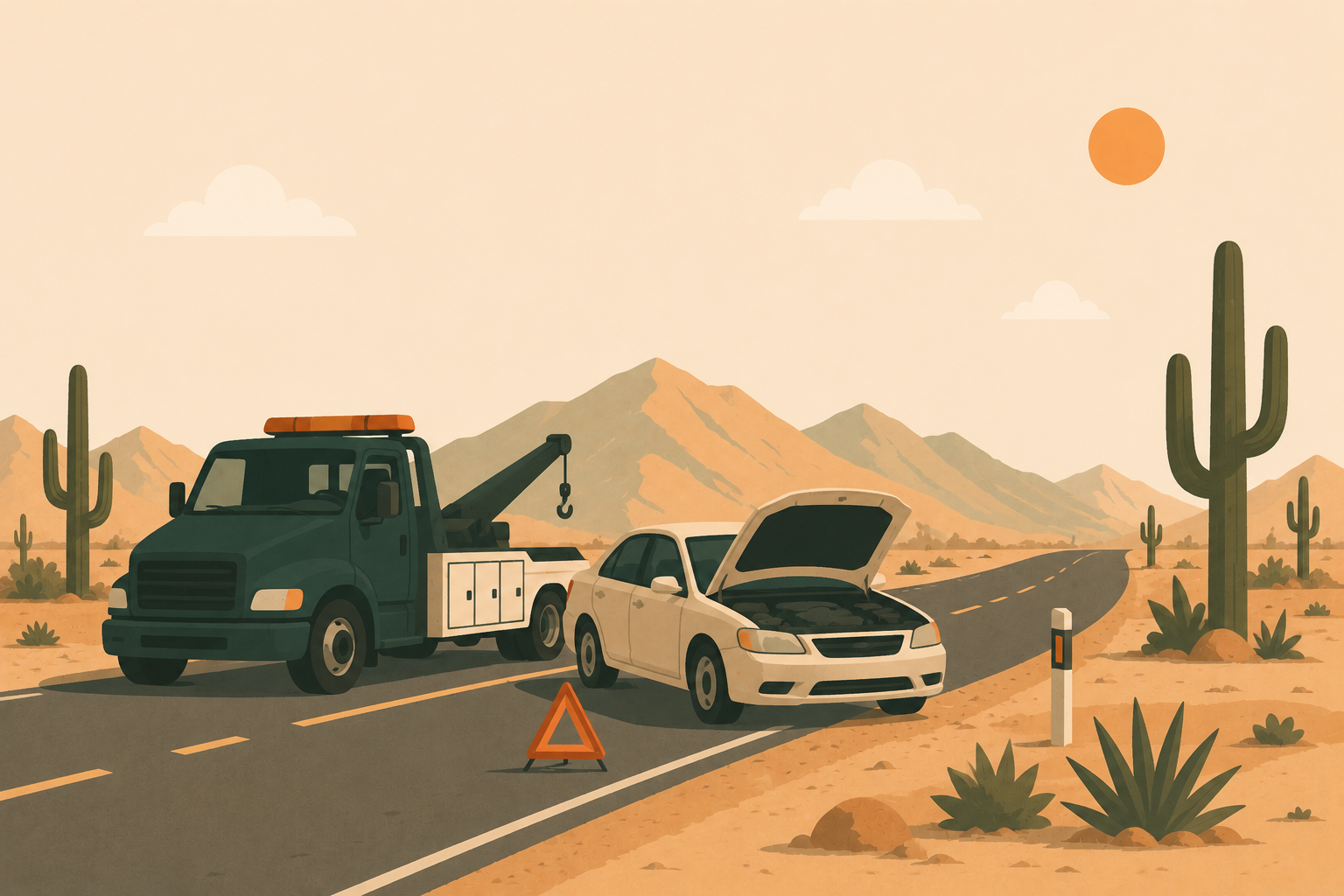
Roadside assistance typically covers non-accident breakdown help. The standard bundle across most carriers includes:
-Towing to the nearest repair facility (usually up to a set number of miles)
-Battery jump-starts
-Flat tire changes (using your spare)
-Lockout assistance if your keys are inside the car
-Fuel delivery if you run out of gas (you still pay for the fuel itself)
It does not cover repairs, damage from an accident, or the cost of the gas or replacement parts you might need. Those are separate things. Roadside assistance is designed to get you off the shoulder of the road and to a shop, not to fix the underlying problem.
How much it costs
Adding roadside assistance to your existing auto policy is one of the cheapest coverages on the entire policy. Most carriers charge somewhere between $10 and $30 per year, per vehicle.
Compare that to the cost of a single tow without coverage, which can easily run $75 to $150 for a short trip in the Phoenix area. One use pays for years of coverage.
The trap most articles won't tell you about
Here's where it gets interesting, and where most "should you get roadside assistance" articles stop short.
When you use your insurance carrier's roadside assistance, it can be logged as a claim on your policy.
State Farm addresses this directly on their own consumer education site. Their guidance: "Some insurers may treat roadside assistance use as claims activity or service history, which could affect underwriting decisions or eligibility in certain situations." Whether it affects your premium varies by insurer and by state, and they explicitly recommend asking your agent how your policy handles it.
Even more important: insurance claims, including some roadside assistance calls, may be reported to a shared industry database called CLUE (Comprehensive Loss Underwriting Exchange), operated by LexisNexis. According to a 2026 industry brief from USI Insurance Services, 99% of auto insurers use CLUE data when determining pricing or eligibility, and claims stay on your report for seven years. That means multiple roadside calls with one carrier could potentially follow you if you shop for insurance somewhere else down the road.
None of this means one roadside call is going to blow up your policy. It usually won't. But it does mean that using your insurance-based roadside assistance heavily is worth thinking about before you make the fourth or fifth call in a year.
So what should you actually do?
Here's the practical answer.
If you drive a newer vehicle: Check whether your manufacturer already includes roadside assistance for free. Many do for the first three to five years or up to a mileage limit. Honda, Ford, Chevrolet, and others include it. If yours does, you may not need to add it to your auto policy at all.
If you're a AAA member or have credit card roadside coverage: You may already be covered. Some credit cards (particularly premium travel cards) include roadside dispatch. Check what you already have before paying for something twice.
If you don't have coverage from any of those sources: Adding roadside assistance to your auto policy for $10 to $30 a year is usually the cheapest option, and one call pays for the coverage many times over.
If you expect to use roadside help frequently: A standalone auto club membership like AAA might be worth it. AAA plans typically run $60 to $150 per year depending on the coverage level, but they don't count as insurance claims and won't affect your auto premiums no matter how often you use them.
The bottom line
Most drivers should have some form of roadside assistance. Whether you get it through your auto insurance, your car manufacturer, a credit card, or a standalone membership like AAA depends on what you already have and how often you expect to use it.
The one thing you shouldn't do is buy roadside assistance through your insurance policy, use it four or five times in a year, and then wonder why your premium went up at renewal. If you're the kind of driver who breaks down often, a standalone plan is probably a better fit.
If you'd like someone to look at your current auto policy and help you figure out what you already have (and what actually makes sense to add), that's what we do at Switchback. Ten minutes, no pressure, real answers.
Steven White
Founder, Switchback Insurance
The local guide that knows the trail
480-916-7291
Steven@SwitchbackAZ.com
Gilbert, AZ 85296
Sources
State Farm. "Will My Insurance Increase After a Claim?" Consumer education resource. Updated June 2026. https://www.statefarm.com/simple-insights/auto-and-vehicles/will-my-insurance-increase-after-a-claim
USI Insurance Services. "The Hidden Cost of Small Insurance Claims." Q2 2026 Personal Risk Executive Brief. April 2026. https://www.usi.com/executive-insights/executive-series-articles/featured/personal-risk/q2-2026/the-hidden-cost-of-small-insurance-claims/
Insurance.com. "Does using roadside assistance increase your premium?" Reviewed by Leslie Kasperowicz. Last updated July 6, 2026. https://www.insurance.com/auto-insurance/auto-insurance-basics/can-roadside-assistance-sabotage-your-car-insurance.aspx